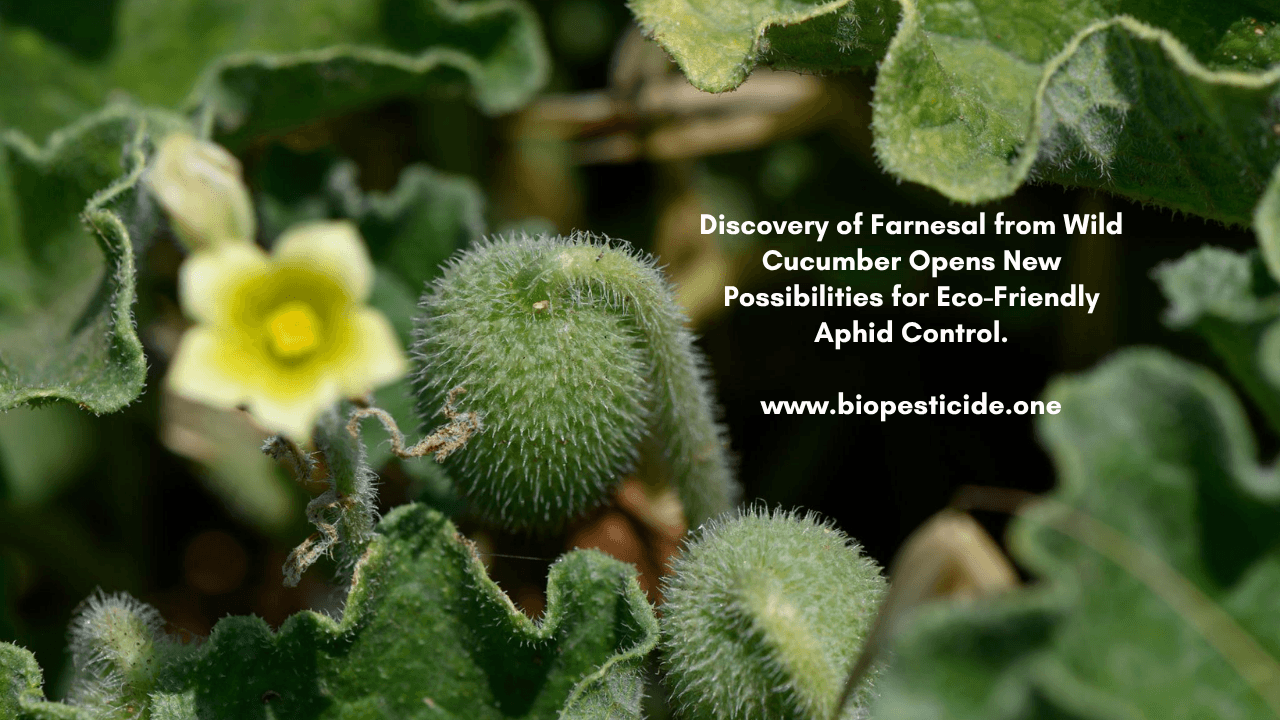
Researchers have identified a promising plant-derived compound called Farnesal that could contribute to the development of environmentally compatible biopesticides for controlling aphids.
The discovery was made through research involving a local cucumber variety, XSBN032, from the Xishuangbanna region of Yunnan, China. Researchers investigated the plant's natural resistance to aphid infestation and identified Farnesal as an important volatile compound associated with its defensive response.
According to the research published in Nature Communications on April 24, 2026, scientists developed a Farnesal-based nanoemulsion formulation and evaluated its effectiveness against aphids on cucumber leaves.
Key Research Findings
The researchers reported several important findings:
A Farnesal nanoemulsion concentration of 0.33 g/L achieved 74.9% aphid mortality within 24 hours under experimental conditions.
The treatment disrupted aphid metabolic processes within six hours.
The formulation affected biological pathways associated with aphid growth and reproduction.
Laboratory safety assessments reported no earthworm mortality under the tested conditions.
Effects on beneficial insects were limited in the reported experiments.
Why This Discovery Matters
Farnesal represents an interesting opportunity for developing plant-derived pest management solutions. Its potential application in nanoemulsion formulations could help improve the delivery, stability and effectiveness of naturally derived compounds.
However, further field trials, formulation optimization, production cost assessments and regulatory evaluations will be necessary before commercial agricultural applications can be established.
Research Publication
Journal: Nature Communications
Publication date: April 24, 2026
Research DOI: https://doi.org/10.1038/s41467-026-72502-9
Category: Biopesticide Research | Natural Compounds | Bioinsecticides