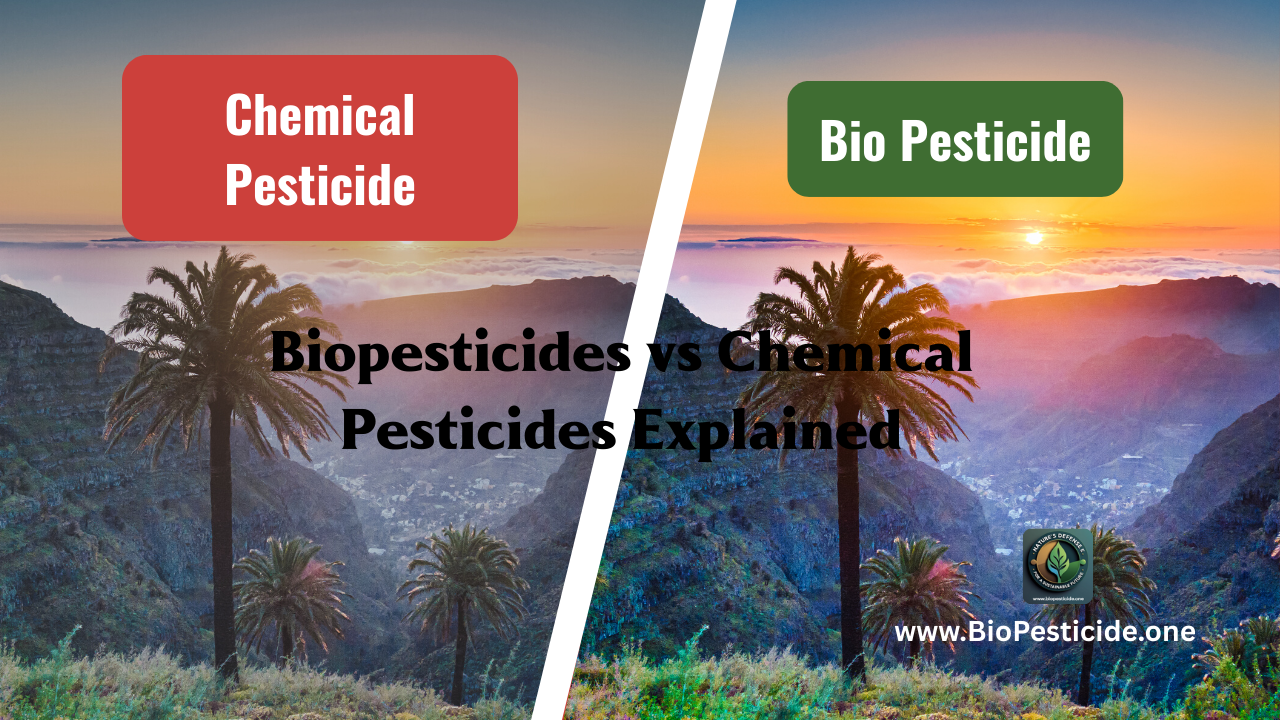
Modern agriculture faces a major challenge: protecting crops while ensuring environmental safety and human health. Two major solutions dominate the industry—biopesticides and chemical pesticides. Understanding their differences helps farmers, policymakers, and agribusinesses make smarter decisions.
What Are Biopesticides?
Biopesticides are derived from natural sources such as plants, bacteria, fungi, minerals, and beneficial insects. They control pests through natural mechanisms like disrupting growth cycles, repelling insects, or targeting specific pests without harming beneficial organisms.
What Are Chemical Pesticides?
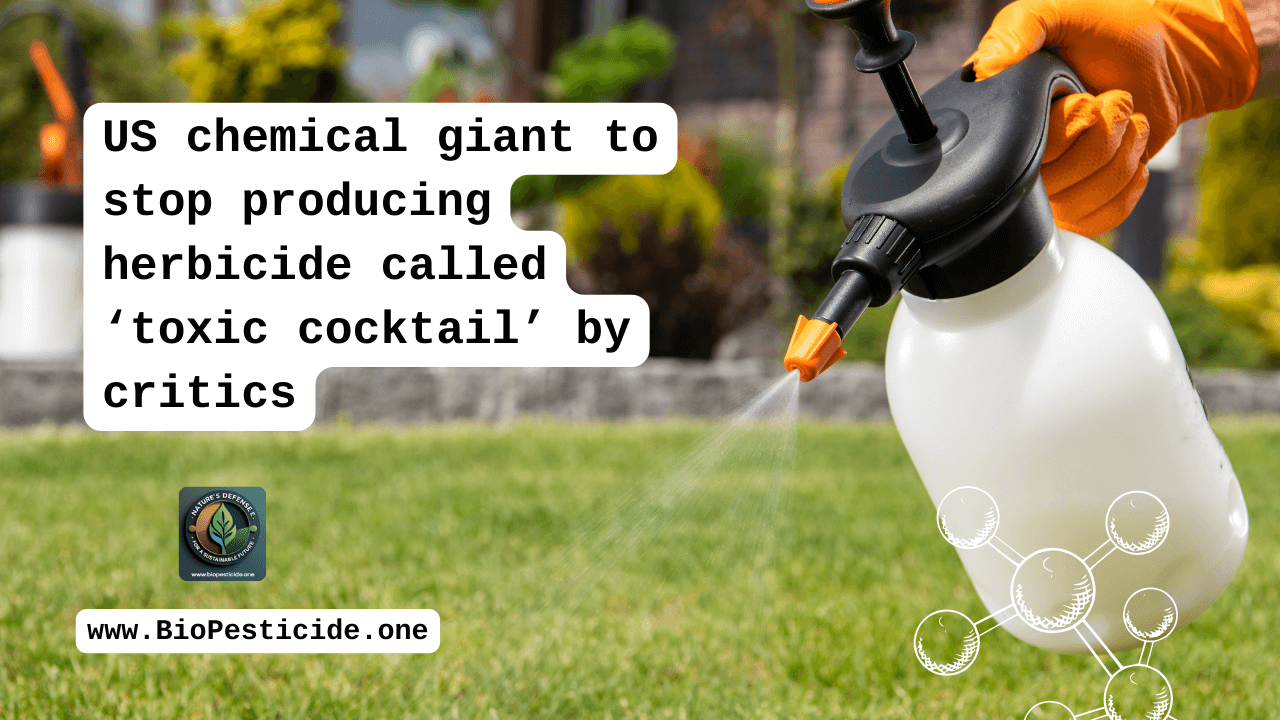
Chemical pesticides are synthetic compounds designed to kill or control pests quickly. They are widely used due to their fast action, broad effectiveness, and ease of application across large-scale farming operations.
Key Differences Between Biopesticides and Chemical Pesticides
1. Source & Composition
Biopesticides come from natural materials and biological processes, while chemical pesticides are man-made using synthetic chemicals.
2. Environmental Impact
Biopesticides are eco-friendly and biodegradable, leaving minimal residue. Chemical pesticides can contaminate soil, water, and non-target species if overused.
3. Target Specificity
Biopesticides usually target specific pests, protecting beneficial insects like bees and predators. Chemical pesticides often affect a wide range of organisms, including non-target species.
4. Resistance Management
Pests develop resistance more slowly against biopesticides. Chemical pesticides can lead to rapid resistance, requiring stronger or higher-dose applications over time.
5. Speed of Action
Chemical pesticides work quickly and provide immediate results. Biopesticides act gradually but support long-term pest control and ecosystem balance.
6. Human & Food Safety
Biopesticides have low toxicity and are safer for farmers and consumers. Chemical pesticides may leave harmful residues if not used correctly.
Which One Should Farmers Choose?
The choice depends on crop type, pest pressure, cost, and sustainability goals. Many modern farming systems now use Integrated Pest Management (IPM)—combining biopesticides with limited chemical use to maximize effectiveness and reduce risk.
Future of Crop Protection
With increasing demand for organic food, sustainable farming, and stricter regulations, biopesticides are gaining global momentum. However, chemical pesticides will continue to play a role where rapid intervention is required.
Final Thoughts
Biopesticides and chemical pesticides each have strengths and limitations. Understanding their differences enables smarter crop protection strategies that balance productivity, safety, and sustainability.
www.BioPesticide.one
info@biopesticide.one